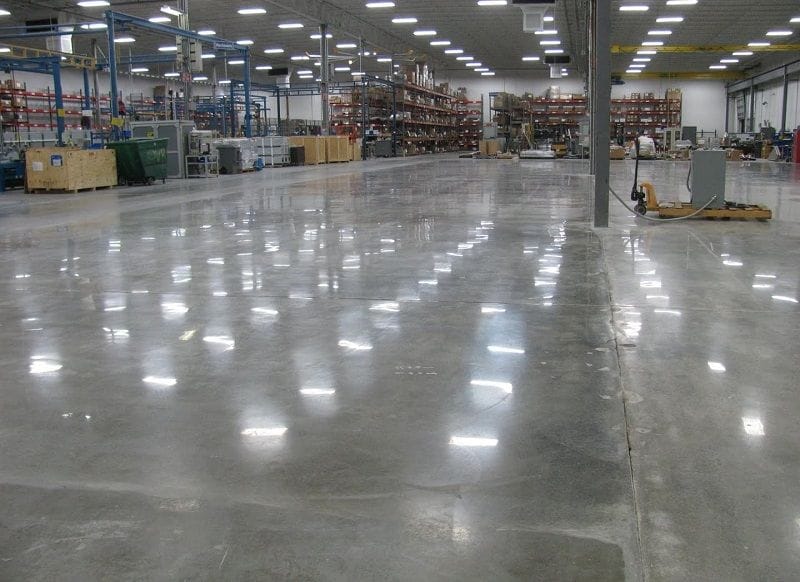
Industrial Areas & Labs
- Durability and ease of cleaning make polished concrete suitable for workshops, warehouses and pharma industry labs.
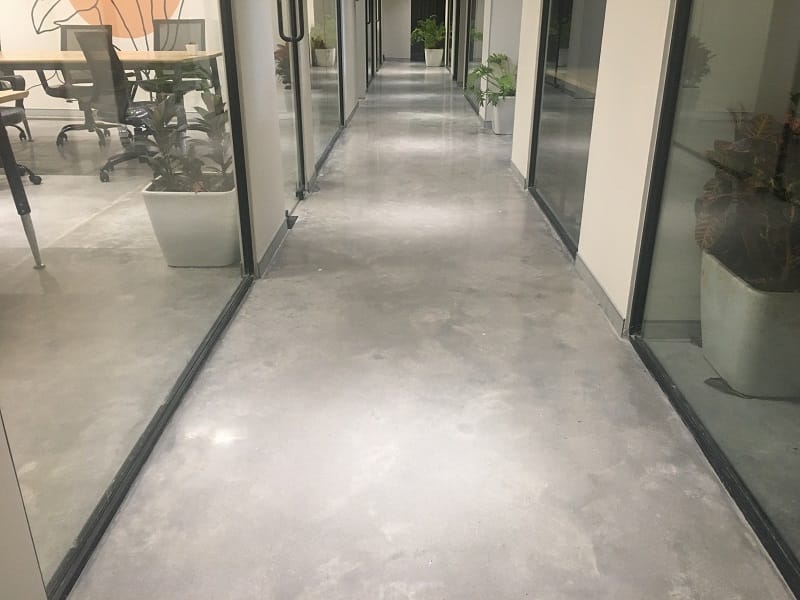
A refined, reflective concrete finish with practical everyday performance. Polished concrete transforms a concrete slab into a smooth, glossy floor. The level of grinding and polishing controls the reflectivity, from a subtle sheen to a mirror-like finish. Concrete can also be coloured before polishing for a more personalized result. Popular in commercial buildings, polished concrete is durable and straightforward to maintain.
A polished concrete floor has a glossy, mirror-like finish, with design options shaped by the polishing steps and the desired level of reflectivity. Existing concrete can be refined to reveal its natural character, or coloured before polishing for a distinctive finish.
Polished concrete is popular in commercial buildings because it is durable and easy to maintain. Its versatility also suits residential and industrial environments. Regular cleaning with a neutral-pH mop helps keep the floor looking its best; installation and maintenance should follow the recommendations for the selected system and site conditions.
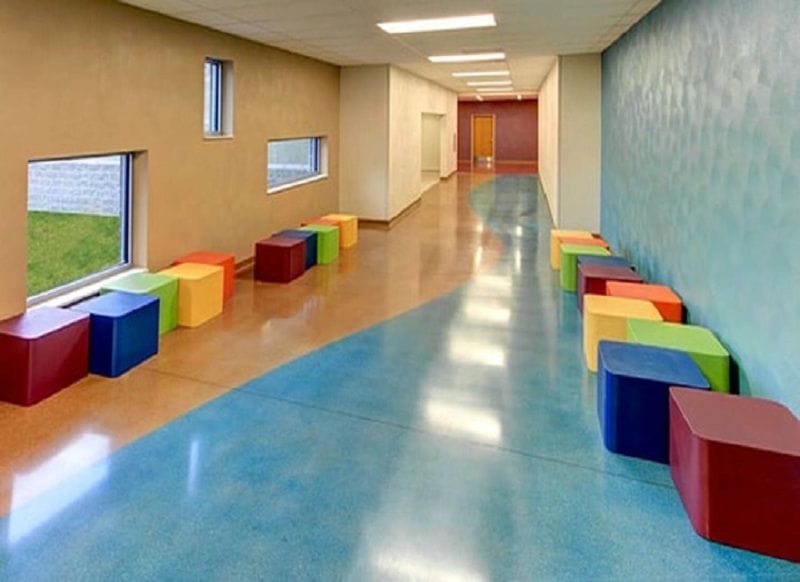
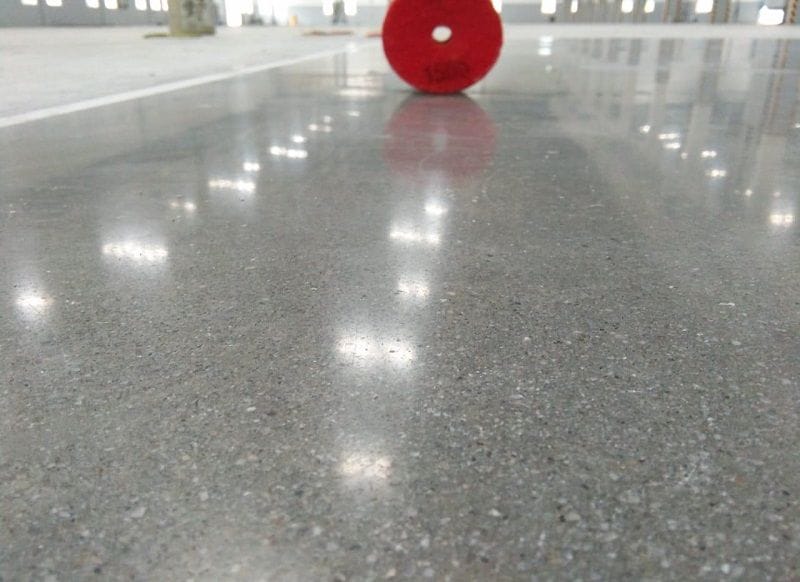
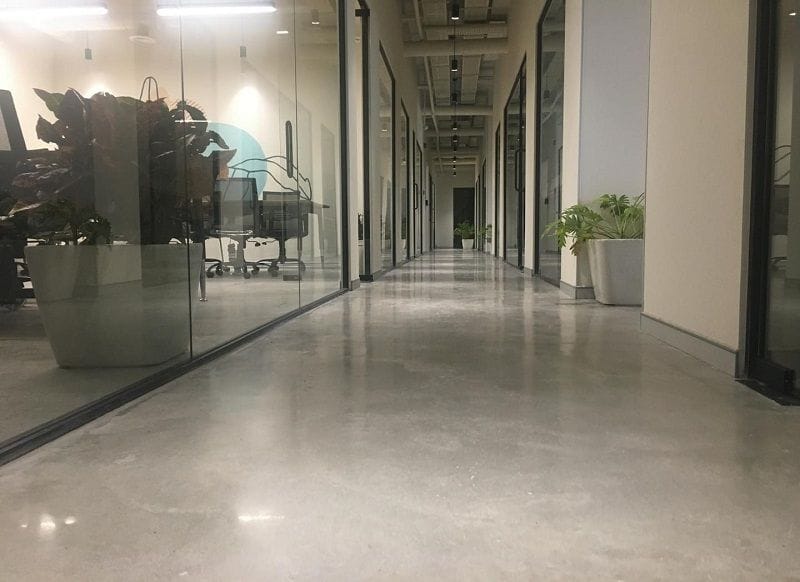
Polished concrete can be produced using different polishing stages to control the final sheen. The source page describes three colouring approaches: integral colour mixed through the concrete, dyes applied to the concrete surface, and dry-shake colour hardener applied during placement.
Hi-Crete’s published method statement says polishing may be carried out on existing concrete or newly cast floors after the specified curing period (28 days). It describes M25 or higher concrete for new pours and requires the slab and preparation to be assessed for the selected process. These are source-method recommendations; the project engineer and contractor should confirm the correct specification for site conditions and applicable standards.